Carbide rods, also known as tungsten carbide rods, are the core raw material for almost all rotary cutting tools, such as drills, end mills, reamers, and other precision tools. Carbide rod blanks are well known for their outstanding hardness and wear resistance.
Today, we are going to take a closer look at carbide rods, including their main types, typical applications, selection criteria, and key purchasing considerations. Whether you are sourcing tungsten carbide rods for tool production or evaluating different carbide rod blanks for specific machining needs, this guide will help you make informed decisions.
What Are Carbide Rods?
Carbide rods are cylindrical carbide blanks widely used as the base material for cutting tools. They are made by combining tungsten carbide powder with a cobalt binder through powder metallurgy. This material structure gives carbide rods their high hardness and excellent wear resistance, which are essential for machining applications. Carbide rods can be precisely ground, fluted, and coated according to the final application.
In terms of size, 330 mm is the most widely used standard length of tungsten carbide rods worldwide, roughly equal to 13 inches. This length is highly compatible with standard tool lengths and common machine tool magazines. Other common lengths include 160 mm, 200 mm, 250 mm, 380 mm, and 400 mm.
Types of Carbide Rods
Carbide rods can be classified in several ways based on structure, profile, and finish. Each type is designed for different tooling requirements and machining conditions. Understanding these differences helps tool manufacturers select the most suitable tungsten carbide rods for their applications.
By Structure
- Solid Carbide Rods
Solid carbide rods are the most common type of carbide rod blanks. They feature a fully solid structure without internal holes. This type is widely used for standard drills, end mills, and reamers where coolant-through is not required.
- Carbide Rods with Coolant Holes
Carbide rods with coolant holes are designed for internal coolant supply during machining. Compared with solid carbide rods, they offer better cooling efficiency and chip evacuation, especially in deep-hole drilling and high-speed cutting.
According to the hole design, they can be divided into straight-hole and spiral-hole configurations. Spiral coolant holes provide more uniform coolant distribution and smoother chip removal. In addition, carbide rods may come with single-hole, double-hole, or multi-hole designs to meet different tool geometries and cutting conditions.
By Profile
- Straight Carbide Rods
Straight carbide rods are cylindrical along the entire length and are the most widely used profile. They are suitable for manufacturing standard cutting tools and allow flexible downstream processing.
- Tapered or Stepped Carbide Rods
Tapered and stepped rods are used for producing special tools such as tapered end mills and step drills. By using pre-shaped carbide rods, tool manufacturers can reduce material removal and improve production efficiency.
- Chamfered Carbide Rods
Chamfered carbide rods feature pre-formed chamfers on one or both ends. This design is intended for specific tooling needs and helps simplify tool grinding and positioning during manufacturing.
By Finish
- Unground Carbide Rods
Unground carbide rods are supplied with dimensional allowance. They are more cost-effective and suitable for applications where full-size grinding will be performed. This type offers greater flexibility for customized tool designs.
- Ground Carbide Rods
Ground carbide rods, also known as ground tungsten carbide rods, provide high dimensional accuracy and consistent surface quality. They reduce subsequent machining time and cost and can be directly used for flute grinding and cutting edge preparation. For many tool manufacturers, ground carbide rods are preferred for stable and efficient production.
Applications of Carbide Rods
Thanks to their high hardness, wear resistance, and compressive strength, carbide rods are widely used in both cutting tool manufacturing and wear-resistant components.
Rotary Cutting Tools
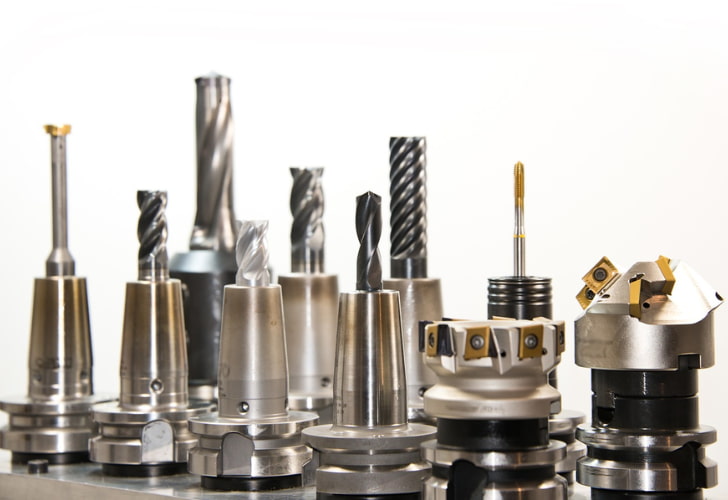
(Image Source: Photo by blickpixel on pixabay.com)
The most common application of carbide rods is the production of rotary cutting tools. Carbide rod blanks are extensively used to manufacture end mills, drills, and reamers for metal cutting. In addition to standard tools, cemented carbide rods are also used for micro tools in medical, dental, and PCB machining. These applications demand high material consistency and dimensional accuracy.
Wear Parts
Apart from cutting tools, carbide rods are commonly used to produce wear-resistant parts. Guide pins and mandrels made from carbide round bar offer excellent resistance to abrasion and deformation, especially in high-cycle operations.
Carbide rods are also used for punches and ejector pins in dies and molds. In these applications, tungsten carbide round blanks help maintain tight tolerances and reduce wear during repeated forming processes.
In addition, carbide rods are suitable for manufacturing measurement and probing components, where dimensional stability and surface durability are critical.
How to Choose the Right Carbide Rods
Choosing the right carbide rods is not only about price or availability. It is a systematic process that involves application analysis, specification matching, and supplier evaluation. The following steps can help reduce risks and improve sourcing efficiency.
Step 1: Define the End Use and Workpiece Material
The first step is to clearly define the final application and the material to be machined. Different carbide rod grades are designed for different materials, such as steel, stainless steel, cast iron, titanium alloys, or composites.
Matching carbide grade with the cutting material directly affects tool life, cutting stability, and surface finish. Without this alignment, even high-quality tungsten carbide rods may fail to deliver expected performance.
Step 2: Determine Specifications
Diameter and Length
Standard dimensions should be considered first. Common diameters cover a broad range for drills and end mills. For special tool designs, customized diameters and lengths are also available from most carbide rod manufacturers.
Structure and Profile
The rod structure should match the final tool design. Solid carbide rods are suitable for general-purpose tools, while carbide rods with coolant holes are preferred for deep-hole drilling or high-speed machining. For special tools, tapered or stepped carbide rods may be required to reduce material removal during grinding.
Precision Level
Precision requirements depend on the downstream process. Unground carbide rod blanks offer cost advantages and machining allowance. Ground carbide rods provide higher dimensional accuracy and can be directly used for flute grinding, saving time and processing cost.
Step 3: Evaluate Supplier Capabilities
Quality Management System
Reliable carbide rods suppliers should operate under recognized quality systems such as ISO 9001.
Technical and R&D Capability
Strong tungsten carbide rod suppliers usually have in-house grade development capabilities. Proprietary grades optimized for specific materials indicate solid technical expertise rather than simple trading capacity.
Vertical Integration and Process Control
In-house control from powder preparation to sintering is a key factor for quality consistency. Carbide rod manufacturers with vertically integrated processes are better positioned to maintain stable material properties across different production lots.
Industry Reputation and References
Membership in recognized industry associations and long-term cooperation with major customers are practical indicators of supplier credibility. These factors often reflect real market validation rather than marketing claims.
Step 4: Start with Small Trial Orders
Before placing large-volume orders, trial samples are a critical risk-control step. Testing carbide rod blanks through inspection and trial machining helps verify actual performance.
In rare cases, sample quality and bulk quality may differ. When this happens, comparing inspection reports between samples and production batches can clarify responsibility. If necessary, formal dispute resolution may be required. That said, reputable carbide rods suppliers understand the long-term cost of reputation damage and rarely take such risks.
Conclusion
As a fundamental material in modern manufacturing, carbide rods play a critical role in cutting tool production and wear-resistant applications. Successful sourcing of carbide rod blanks is not based on price alone. The key lies in selecting the right carbide grade to match the machining application, combined with a dependable supplier that can ensure stable quality.